

It sounds simple enough.
Your floors look dull. You want them to shine. You walk down the cleaning aisle and see products promising a quick glow, instant shine, or “renewed” floors in just one application. Products like wax, Mop & Glo, acrylic floor polish, shine restorers, floor finish, and similar over-the-counter coatings may seem like an easy fix.
But here is the truth most homeowners do not find out until it is too late:
Those products can create serious problems on tile, grout, natural stone, hardwood, engineered wood, luxury vinyl, and other hard surface floors.
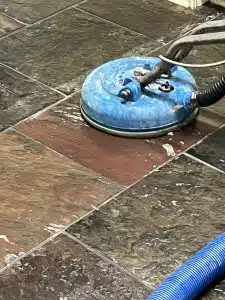
At first, the floor may look better. It may appear shinier for a few days or even a few weeks. But over time, these products often begin to build up layer after layer. Instead of truly cleaning or restoring the floor, they leave behind a coating. That coating can trap soil, darken grout lines, turn cloudy, become sticky, yellow over time, show footprints, peel unevenly, and make the floor much harder to maintain.
In many cases, homeowners do not realize they have a floor finish buildup problem. They just know their floors look dirty no matter how often they mop. They may notice the floor looks blotchy, streaky, greasy, cloudy, or darker in high-traffic areas. They may assume the tile is permanently stained, the grout is ruined, the stone is damaged, or the wood floor is beyond help.
Many times, the real issue is product buildup.
This is one of the most common problems we see when cleaning and restoring floors for homeowners throughout Collierville, Germantown, Memphis, Arlington, Bartlett, Lakeland, Cordova, and the surrounding Mid-South area. Well-meaning homeowners use products that promise shine, but the end result is often dullness, discoloration, and a sticky residue that regular mopping cannot remove.
This blog explains why you should avoid wax, Mop & Glo, acrylic floor polish, floor finish, shine restorers, and similar products on tile, natural stone, and wood floors — and what to do instead.
The Problem With “Shine in a Bottle” Floor Products
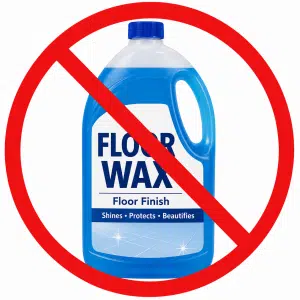
Most homeowners do not use these products because they want to damage their floors. They use them because they want their home to look clean, fresh, and well-maintained.
The problem is that many shine products do not actually clean or restore the floor. They coat it.
There is a major difference between cleaning a floor and coating a floor.
Cleaning removes soil, residue, body oils, pet oils, cooking grease, mop water contamination, detergent film, and embedded grime. Coating covers the surface with a layer of product. That layer may temporarily reflect light, which creates the appearance of shine, but it can also trap everything underneath it.
A common cycle looks like this: the floor starts to look dull, so the homeowner applies a shine product. The floor looks better for a short time. Then it begins to look dull, streaky, or dirty again. The homeowner mops and applies more product. The floor gets another temporary shine, but now there are multiple layers of coating on the surface. Eventually, the floor becomes darker, cloudy, sticky, uneven, or impossible to clean with normal mopping.
That is why these products are often a temporary shine with a long-term problem.
What Are Wax, Mop & Glo, Acrylic Polish, and Floor Finish Products?
When people say “wax,” they may be referring to several different types of floor coatings. Some are true waxes. Others are acrylic finishes, polymer coatings, polish products, or shine restorers. Homeowners often group them together because they are sold for the same purpose: making floors look shiny.
Products in this category may include wax-based floor products, acrylic floor polish, mop-on shine restorers, floor rejuvenators, no-buff floor finishes, Mop & Glo-type products, store-bought shine enhancers, and certain “restore” or “renew” products for hardwood, laminate, vinyl, tile, or stone.
The issue is not always one specific product. The issue is the repeated use of any product that leaves a film or coating behind, especially when used on the wrong surface or used too often.
Floors are not all the same. Ceramic tile, porcelain tile, travertine, slate, marble, hardwood, engineered wood, laminate, and luxury vinyl plank all have different maintenance needs. A product that may be acceptable for one type of floor in one situation can be a bad choice for another.
The safest rule for homeowners is this: do not apply wax, acrylic polish, Mop & Glo, floor finish, shine restorers, or similar coatings unless the floor manufacturer or a qualified floor care professional specifically recommends that product for your exact floor type and condition.
For most residential tile, grout, natural stone, and modern wood floors, these products are not the solution.
Why Wax and Shine Products Cause Buildup
Every time you apply a coating to the floor, a small amount of product remains behind. That is how the shine is created. The product dries on the surface and forms a thin layer.
One layer may not look terrible at first. But most homeowners do not stop at one layer. They continue using the product over time. The buildup may happen slowly, so the change is not obvious right away.
Over time, the floor may start to show streaks, feel tacky or sticky, look cloudy, attract dirt faster, develop darker traffic lanes, or show peeling, flaking, yellowing, and uneven patches.
At that point, the problem is no longer simple dirt. It is layers of coating mixed with soil, cleaning residue, oils, dust, and mop water contamination.
Normal mopping usually cannot remove this buildup. In fact, mopping can make it worse if dirty mop water spreads residue around or if more cleaner is added on top of the existing film.
This is why homeowners often say, “No matter how much I mop, my floors still look dirty.” They are not imagining it. They are trying to clean through a coating that is holding soil in place.
Wax Coating vs. Proper Tile & Grout Restoration
Store-bought wax and floor finish products can leave behind a sticky coating that attracts dirt, darkens grout lines, and makes floors harder to clean.
“`
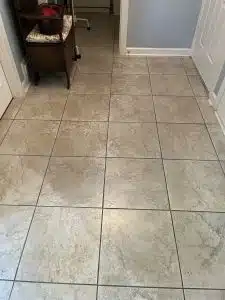
Tile & grout with a wax coating — attracts dirt, leaves floors sticky, and causes dirty-looking grout lines.
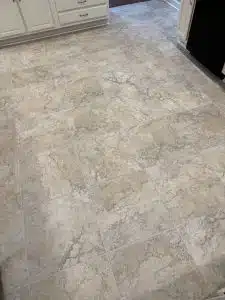
Tile & grout after stripping and removing the wax, then applying the proper grout color sealer for long-lasting protection against dirt, spills, and staining.
“`
Why You Should Not Put Wax or Mop & Glo on Tile Floors
Ceramic and porcelain tile floors are popular because they are durable, easy to maintain, and moisture-resistant when properly installed. But tile floors still need the right type of cleaning.
One of the biggest mistakes homeowners make is applying wax, Mop & Glo, floor finish, or shine products to tile.
Tile itself usually does not need wax. Most ceramic and porcelain tile already has a manufactured surface. Some tile has a glazed finish. Some tile has a matte, textured, or stone-look surface. Adding a topical coating over that surface can create several problems.
Wax Can Make Tile Floors Look Dirty Faster
When a coating is applied to tile, it can act like a magnet for soil. Instead of soil being removed during cleaning, it becomes stuck in the coating. Over time, the floor can look darker and dingier.
This is especially noticeable in kitchens, bathrooms, laundry rooms, entryways, and other high-traffic areas where dirt, cooking oils, pet residue, soap film, and moisture are common.
Wax Can Settle Into Grout Lines
Grout is porous compared to tile. When wax or polish is mopped across tile, it often settles into the grout lines. This can cause grout to darken, discolor, or look uneven.
Many homeowners think their grout is permanently stained when the real issue is years of trapped residue.
Wax Can Create a Cloudy or Hazy Appearance
Tile floors may develop a cloudy appearance when coatings are applied unevenly or layered over soil. You may see streaks, dull patches, shiny patches, or areas that look greasy. The floor may look like it has a film even right after it has been cleaned.
That is because the film is the problem.
Wax Can Make Tile Slippery
Some shine products can make tile floors slick, especially when the surface gets damp. This can be a safety concern in bathrooms, kitchens, laundry rooms, and entryways.
A shiny floor is not worth increasing the risk of slipping.
Wax Can Interfere With Professional Cleaning or Sealing
If you eventually decide to have your tile and grout professionally cleaned or color sealed, wax buildup can interfere with the process.
Grout color sealing requires clean, properly prepared grout lines so the color sealer can bond correctly. If grout is contaminated with wax, polish, oils, or residue, that buildup may need to be stripped or removed before the grout can be sealed.
In other words, the product that was supposed to make your floor easier to maintain can make professional restoration more difficult.
Why You Should Not Put Wax or Mop & Glo on Natural Stone Floors
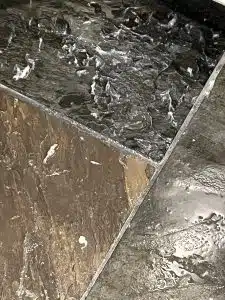
Natural stone requires even more caution than ceramic or porcelain tile. Travertine, marble, slate, limestone, granite, and other natural stone floors are beautiful, but they are not all maintained the same way.
Stone is a natural material. Many types are porous, sensitive to certain chemicals, and vulnerable to etching, staining, or surface damage. Putting wax, Mop & Glo, acrylic polish, or shine restorers on natural stone can create serious issues.
Natural Stone Needs Proper Sealing, Not Wax
Many natural stone floors benefit from penetrating sealers, also called impregnating sealers. These sealers are designed to absorb into the stone and grout to help resist staining while allowing the surface to maintain its natural appearance.
A topical wax or polish is different. It sits on top of the stone. When a coating sits on top of stone, it can trap moisture, soil, and residue. This can lead to cloudiness, discoloration, uneven sheen, or a plastic-looking finish that takes away from the natural beauty of the stone.
Wax Can Change the Appearance of Stone
Stone has natural movement, color variation, texture, and depth. That is part of what makes it beautiful. A topical shine product can flatten or distort the appearance of the stone. It may make some areas overly shiny while others remain dull. It may darken certain sections. It may collect in pits, holes, clefts, and grout lines.
On textured stone like slate or tumbled travertine, coatings can build up in the low areas and create a blotchy, dirty look.
Wax Is Not the Same as Stone Polishing
A shiny stone floor should not usually come from wax. True natural stone polishing is a mechanical process. Depending on the stone and desired finish, professionals may use diamond abrasives, polishing powders, honing, buffing, or other stone-safe methods to restore the surface.
Wax is not real stone polishing. It is a coating. A waxed stone floor may look shiny temporarily, but it is not the same as properly polished stone. In fact, wax buildup can make future stone restoration more complicated and more expensive.
Why You Should Not Put Wax or Floor Polish on Hardwood Floors
Hardwood floors are another surface where homeowners often reach for shine products. The floor looks dull, scratched, worn, or cloudy, so a product promising “restoration” seems like an easy solution.
Unfortunately, wax, acrylic polish, Mop & Glo-type products, and shine restorers can cause major problems on hardwood floors, especially modern polyurethane-finished hardwood.
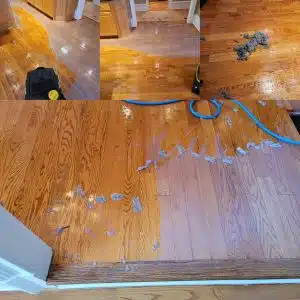
Most Modern Hardwood Floors Do Not Need Wax
Many older hardwood floors were waxed as part of their maintenance system. But most modern hardwood floors are finished with polyurethane or another protective coating. These floors are not designed to have household wax or acrylic polish repeatedly applied on top.
When wax or polish is added to a polyurethane-coated wood floor, it can create a film that dulls, streaks, or becomes sticky. It can also interfere with future recoating.
Wax Can Prevent Future Screen and Recoat Services
A screen and recoat is a maintenance process where the existing finish is lightly abraded and a new coat of finish is applied. This can be a great option for hardwood floors that are worn but not damaged enough to require full sanding and refinishing.
However, wax, acrylic polish, silicone, oil soaps, and other residues can interfere with adhesion. If the floor has contamination from shine products, a new finish may not bond properly.
Wax Can Make Hardwood Floors Cloudy, Sticky, or Slippery
One of the most common complaints with hardwood shine products is cloudiness. The floor may look hazy, smeared, or dull after the product dries. This can happen when the product is applied too heavily, applied over soil, applied over previous layers, or used on a finish it was not designed for.
A coated wood floor can also become slick, especially with socks, pets, or children in the home. Over-application makes this worse.
Wood floors should have a clean, natural, properly maintained finish — not a slippery layer of residue.
The “Clean Floor” Illusion: Why Shine Does Not Equal Clean
Many homeowners associate shine with cleanliness. A shiny floor looks clean. A dull floor looks dirty.
But shine and cleanliness are not the same thing.
A floor can be shiny and still be covered in residue. A floor can be matte and perfectly clean. A natural stone floor can have a honed finish and look elegant without being glossy. A wood floor can have a satin finish and be properly maintained without looking like glass.
The goal should not always be maximum shine. The goal should be a floor that is clean, healthy, safe, properly maintained, and appropriate for the material.
Wax and shine products often create the appearance of clean while hiding soil underneath. Over time, the shine fades, but the residue remains. Then the homeowner is left with a floor that looks dirty, feels sticky, and becomes harder to clean.
When a floor reaches that point, the problem is not lack of effort. It is the wrong maintenance product.
Common Signs You Have Wax or Product Buildup on Your Floors
You may have wax, Mop & Glo, acrylic polish, floor finish, or cleaning product buildup if you notice any of the following:
- Your floor looks cloudy or hazy even after mopping.
- The floor feels sticky or tacky under bare feet.
- The floor looks streaky no matter what cleaner you use.
- High-traffic areas look darker than edges or corners.
- The grout lines are dark, uneven, or greasy-looking.
- The floor has shiny patches and dull patches.
- Footprints show easily after cleaning.
- Pet hair, dust, and soil seem to stick to the floor.
- The floor looks yellowed or amber in certain areas.
- The surface appears to peel, flake, or scratch off.
- Your mop water gets dirty quickly, but the floor still looks dirty.
- The floor looks worse every time you add another shine product.
- The floor feels slick when damp.
- The stone floor looks plastic-like instead of natural.
- The wood floor looks smeared or cloudy in sunlight.
These symptoms do not always mean wax is the only issue. Floors can also suffer from detergent residue, hard water deposits, soil buildup, improper cleaners, worn finish, etching, or permanent damage. But wax and polish buildup is a very common cause.
A professional inspection can help determine what is actually happening.
Why Regular Mopping Cannot Fix Wax Buildup
Many homeowners respond to dirty-looking floors by mopping more often. That seems logical. But when the problem is buildup, more mopping is rarely the answer.
Most mops spread water across the floor rather than fully extracting soil. If the mop water becomes dirty, it can redeposit soil into grout lines, textured surfaces, and low areas.
Many household cleaners also leave residue behind. When cleaner residue mixes with wax or polish, the floor can become even stickier.
Wax and acrylic coatings are designed to remain on the floor. They do not simply rinse away with water. That is why they create shine. They are meant to dry in place.
Once soil becomes embedded inside layers of coating, surface mopping only cleans the top layer. It does not remove what is trapped underneath.
This is why homeowners can mop again and again without solving the problem.
Why DIY Stripping Can Be Risky
Once homeowners realize they may have wax buildup, many search online for ways to strip it off. Some try ammonia, vinegar, degreasers, abrasive pads, steam mops, or heavy-duty cleaners.
This can be risky.
Different floors respond differently to chemicals and moisture. A cleaner that may work on one type of tile could damage natural stone. A stripping product that removes acrylic from vinyl could harm wood. Vinegar may be commonly suggested online, but acidic cleaners can etch or dull certain natural stones like marble, travertine, and limestone.
Steam mops can also create problems. Excess heat and moisture can affect wood, engineered flooring, laminate flooring, some luxury vinyl plank floors, and certain finishes. On waxed or polished floors, steam may soften the coating unevenly and create a bigger mess.
DIY stripping can also lead to uneven results. You may remove buildup in one area but not another, leaving the floor blotchy. You may strip the shine but leave residue in grout lines or textured areas. You may damage the floor’s original finish while trying to remove the added coating.
When in doubt, do not experiment with harsh products on expensive flooring.
What Should Homeowners Use Instead?
If your floor looks dull, the first step is identifying the cause. Applying a shine product without knowing the cause is like painting over a problem instead of fixing it.
A floor may look dull because of soil buildup, cleaner residue, hard water film, wax or polish buildup, worn finish, scratches, etching, sun exposure, improper maintenance products, dirty grout, stone that needs polishing, wood that needs maintenance cleaning, or tile that needs professional cleaning.
For routine maintenance, the safest approach is usually simple:
- Use a clean microfiber dust mop frequently.
- Vacuum hard floors with a hard floor setting or soft brush attachment.
- Clean spills quickly.
- Use a neutral pH cleaner appropriate for the floor type.
- Avoid overusing cleaning solution.
- Do not soak the floor.
- Change mop pads often.
- Use clean water and clean tools.
- Avoid oil soaps, waxes, acrylic polishes, and heavy shine products unless specifically recommended.
- Have floors professionally cleaned periodically.
For tile and grout, the solution may be professional tile and grout cleaning, followed by grout color sealing if the grout is stained or uneven.
For natural stone, the solution may be stone-safe deep cleaning, honing, polishing, filling, or sealing.
For hardwood, the solution may be professional maintenance cleaning, buffing, screen and recoat, or refinishing depending on the condition.
For luxury vinyl plank or laminate, the solution may be residue removal and proper neutral cleaning — not polish buildup.
What Professional Floor Cleaning Does Differently
Professional floor cleaning is different from household mopping because it is designed to remove what regular cleaning leaves behind.
Depending on the floor type, professional cleaning may include inspection of the floor condition, identification of residue or wax buildup, pre-treatment with appropriate cleaning solutions, mechanical agitation to loosen embedded soil, hot water rinsing where appropriate, extraction, detail cleaning along edges and corners, grout line cleaning, stone-safe cleaning methods, wood-safe cleaning methods, residue removal, and post-cleaning inspection.
For tile and grout, truck-mounted equipment can provide a much deeper clean than a mop. For natural stone, professional cleaning can remove embedded soil while protecting the stone. For hardwood, professional maintenance cleaning can remove residue without sanding.
The biggest difference is extraction. Mopping spreads water around. Professional equipment removes soil and solution from the floor.
That is why professional cleaning can often restore floors that homeowners thought were permanently dirty.
When Wax Removal or Stripping May Be Needed
If a floor has heavy wax, acrylic polish, or Mop & Glo-type buildup, standard cleaning may not be enough. The coating may need to be stripped or removed before the floor can be properly cleaned or restored.
Wax removal can be more involved than regular cleaning because the coating must be broken down safely and removed from the surface.
The process may vary depending on the floor type, type of coating, number of layers, age of buildup, whether soil is trapped underneath, condition of the grout or finish, and risk of damage.
Some coatings are stubborn. Some floors require multiple passes. Some natural stone and wood floors require extra caution. Some buildup may not come off perfectly if the underlying surface is worn, etched, scratched, or damaged.
Sometimes wax removal reveals the true condition of the floor underneath. The coating may have been hiding scratches, worn finish, etched stone, damaged grout, or permanent staining. That does not mean the cleaning failed. It means the coating was covering up other issues.
A professional can test the floor and explain realistic expectations before beginning the job.
Is Grout Color Sealing the Same as Wax?
No. Grout color sealer is not the same as wax.
Wax and acrylic polish are usually applied across the whole floor surface. They can coat both the tile and grout, trap soil, and create buildup.
Grout color sealing is a specialized process where cleaned grout lines are coated with a durable color sealer. It is applied directly to the grout lines after cleaning. It restores the grout to a consistent color and creates a protective barrier against dirt, spills, and staining.
For many tile floors with stained grout, professional cleaning and grout color sealing is a much better long-term solution than using shine products.
Frequently Asked Questions About Wax, Mop & Glo, and Floor Buildup
Is Mop & Glo bad for tile floors?
Mop-on shine products can cause buildup on tile floors, especially when used repeatedly. They may make the floor look shiny at first, but over time they can trap dirt, darken grout, create streaks, and leave a cloudy or sticky residue.
Can I use wax on ceramic or porcelain tile?
Most ceramic and porcelain tile floors do not need wax. Wax can create a surface coating that attracts soil and makes the floor harder to clean. It can also settle into grout lines and cause discoloration.
Can wax be removed from tile floors?
In many cases, wax or polish buildup can be removed from tile, but it may require professional stripping, cleaning, agitation, and extraction. Heavy buildup may take more time and multiple steps.
Why does my tile floor feel sticky after mopping?
A sticky tile floor is often caused by cleaner residue, wax buildup, acrylic polish, dirty mop water, or overuse of cleaning products. The floor may need deep cleaning or residue removal.
Can I put wax on natural stone?
Wax is generally not recommended for natural stone. It can build up in pits, holes, texture, and grout lines. It can also yellow over time, trap soil, create an artificial finish, and make proper stone restoration more difficult.
Can I use wax on hardwood floors?
Many modern hardwood floors are finished with polyurethane or factory-applied finishes and should not be waxed unless the manufacturer specifically recommends it. Wax or polish buildup can cause cloudiness, streaking, slipperiness, and problems with future recoating.
How do I make my floors shine without wax?
The right method depends on the floor. Tile may need professional cleaning. Grout may need color sealing. Natural stone may need polishing. Hardwood may need professional cleaning or recoating. True restoration is better than adding a temporary coating.
Final Thoughts: Do Not Coat the Problem — Correct It
Wax, Mop & Glo, acrylic polish, floor finish, and similar shine products may seem like an easy way to make floors look better. But for many tile, natural stone, and wood floors, they create more problems than they solve.
They can cause buildup, trap dirt, darken grout, make floors sticky, create cloudy residue, yellow over time, make floors slippery, and interfere with professional cleaning, sealing, polishing, or recoating.
Most importantly, they do not truly fix the reason your floor looks dull or dirty.
If your floors are looking worn, cloudy, sticky, streaky, or hard to clean, the answer is not another layer of product. The answer is proper cleaning, residue removal, and professional maintenance based on the type of floor you have.
Healthy Home Services helps homeowners restore and maintain tile, grout, natural stone, hardwood, engineered wood, luxury vinyl, and other hard surface floors throughout Collierville, Germantown, Memphis, Arlington, Lakeland, Bartlett, Cordova, and surrounding areas.
Before you put wax, Mop & Glo, floor finish, or any shine product on your floors, let us take a look.
Your floors may not need to be coated. They may just need to be professionally cleaned the right way.
For professional floor cleaning, tile and grout cleaning, grout color sealing, natural stone cleaning, or hardwood floor cleaning, contact Healthy Home Services today.
📞 Call or text: (901) 512-7732
🌐 Visit: www.HealthyHomeSVC.com
Healthy Home Services — helping Mid-South homeowners keep their floors cleaner, healthier, and looking their best.


